Backgammon
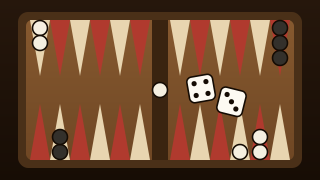
Classic backgammon versus the computer. Roll the dice, race all 15 checkers home and bear them off first. Full rules: hitting blots, re-entering from the bar, gammon and backgammon wins — no doubling cube, to keep games quick and casual.
Backgammon is one of the oldest board games in the world, a race across 24 points where dice supply the luck and your decisions supply the skill. In this version you play the white checkers against the computer, rolling to move your pieces home and bear them off before your opponent can. It keeps the full classic ruleset but drops the doubling cube, so each match stays quick and casual.
How to play
Press roll to throw two dice, then tap a white checker to light up its legal destinations and tap where you want it to land. White always travels from point 24 down toward point 1. If a lone checker gets hit it goes to the bar and must re-enter before any other move. Once all fifteen checkers reach your home board, tap to bear them off and win.
Tips
- You must use as many dice as legally possible; if only one number is playable, play the larger.
- Avoid leaving a single blot within six points of an enemy checker.
- Stack two or more checkers on consecutive points to build a blocking prime.
- Track the pip count so you know whether to race or play a holding game.
For more head-to-head board strategy, try Checkers or Reversi.
Objective
Bring all 15 white checkers into your home board (points 1–6), then bear them all off before the CPU does. Winning a gammon (CPU bore off nothing) or a backgammon (CPU still has checkers on the bar or in your home) multiplies your score.
Controls
- Press Roll to throw 2 dice — doubles grant 4 moves
- Tap a white checker → legal destinations light up, tap one to move
- White always moves from point 24 down to point 1
- A lone checker (blot) that gets hit goes to the bar and must re-enter in the CPU's home (points 24–19) before any other move
- Once all 15 checkers are in your home (1–6), tap a checker then the tray to bear off
- ↶ Undo moves within your turn (before the dice run out)
- No legal move → your turn is passed automatically
Tips
- You must use as many dice as possible; if only one can be played, it must be the higher one
- Avoid leaving blots within 6 points of a CPU checker
- Stack 2+ checkers on consecutive points to build a prime that blocks the CPU
- Keep an anchor (a point with 2+ checkers) in the CPU's home board for safety after being hit
- Watch the pip counts: lower means you are winning the race
- There is no doubling cube — every game is played out to the bear-off